Dr Robert Owen is a Specialist Plastic & Reconstructive Surgeon based in Perth, WA, known for his collaborative, patient-focused approach and commitment to clinical excellence. One of the most frequent topics that arises in consultations for breast implant removal is: “Will it hurt?“ Pain is a very personal experience and a natural concern when considering any surgery, particularly one involving changes to an area of the body that has previously undergone surgical intervention.
This article outlines what patients can expect in terms of discomfort, how pain is managed, and what factors influence the recovery experience. Drawing from Dr Owen’s surgical approach and philosophy, we aim to provide clear, factual guidance for those considering breast implant removal for medical, aesthetic, or functional reasons.
Take Surgery Quiz
What Is Breast Implant Removal?
Breast implant removal, also known as explant surgery, involves the surgical removal of one or both breast implants. It may be performed for a variety of reasons, including:
- Personal choice to return to a more natural breast contour
- Concerns about implant rupture, displacement, or hardening (capsular contracture)
- Development of symptoms attributed to Breast Implant Illness (BII)
- Requests for revision surgery or replacement
During this procedure, the surrounding scar tissue or capsule may also be removed in part (partial capsulectomy) or in full (total capsulectomy or en bloc removal). In some cases, additional procedures such as fat grafting or a breast lift are considered to reshape or support the natural breast tissue.
The outcomes vary based on factors such as implant size, duration of implantation, tissue elasticity, and the patient’s individual anatomy. For some, the breasts will maintain an acceptable shape, while others may experience skin laxity or volume loss. These issues are discussed openly during consultation.
Why Do Patients Choose to Undergo Breast Implant Removal?
Patients choose to have their implants removed for a range of personal, medical, or lifestyle reasons. Some feel that their implants no longer reflect their current preferences or stage of life, while others experience physical symptoms that lead them to seek removal. Common reasons include:
- Changes in aesthetic preference: Some patients feel their implants no longer suit their physique or lifestyle and wish to return to a more natural breast shape.
- Medical complications: Issues like capsular contracture, implant rupture, or chronic discomfort may necessitate removal.
- Breast Implant Illness (BII): While not officially diagnosable, some individuals report systemic symptoms they associate with their implants, such as fatigue or joint pain.
- Planned or existing health conditions: Autoimmune concerns, upcoming medical treatments, or general health changes may influence the decision.
- Reconstructive needs: Patients who originally had implants for reconstruction may later require revision or choose to discontinue implant use.
Ultimately, the choice to undergo explant surgery is highly individual and should be supported by evidence-based guidance and honest discussion about outcomes, alternatives, and risks.
Dr Robert Owen’s Surgical Approach
Dr Owen’s approach is centered on integrity, patient education, and clinical precision. Every patient is assessed individually, and no two procedures are exactly alike. The first step is a thorough consultation, which includes:
- A detailed discussion of the patient’s reasons for seeking implant removal
- An evaluation of physical symptoms (if any) and aesthetic concerns
- A review of prior surgeries, implant types, and any relevant imaging
From there, a surgical plan is developed, which may include:
- Full or partial capsulectomy, depending on the nature of the capsule and surrounding tissues
- Use of fat grafting to provide volume or support if needed
- Possible combination with mastopexy (breast lift) to address excess skin or nipple position
Dr Owen prioritises minimal tissue trauma, stable implant pocket closure, and careful haemostasis to support healing and reduce complications. His method is grounded in evidence-based best practices, and where appropriate, he works closely with other medical professionals in a multidisciplinary care model.
The Procedure – What to Expect
Before Surgery
The pre-operative phase includes a full medical workup, breast imaging when indicated, and a comprehensive discussion about expectations. Patients are encouraged to ask questions and may be advised to stop smoking, adjust medications, or undertake imaging studies prior to surgery.
Realistic outcomes are always discussed, especially if implant removal is motivated by health concerns such as BII. While some individuals report improvement in symptoms post-removal, others may not experience the same relief, and no guarantees are made.
During Surgery
The procedure is performed under general anaesthesia. Whenever possible, Dr. Owen uses the original incision site to minimise additional scarring. If the capsule is inflamed, thickened, or causing functional issues, it may be removed entirely. If not, a more conservative removal may be appropriate.
In some cases, drains may be placed temporarily to reduce fluid accumulation, particularly if there has been previous scarring or the surgery is more complex.
After Surgery
Post-operative care is structured and guided. Patients typically wear a front-fastening soft support bra for 6 weeks. Light walking is encouraged once wounds have healed (generally around 2 weeks post-op), while more vigorous activities and heavy lifting are deferred for at least 6 weeks.
Routine follow-up appointments allow monitoring for healing, seromas, or any early signs of complications. Clear, compassionate communication remains a priority.
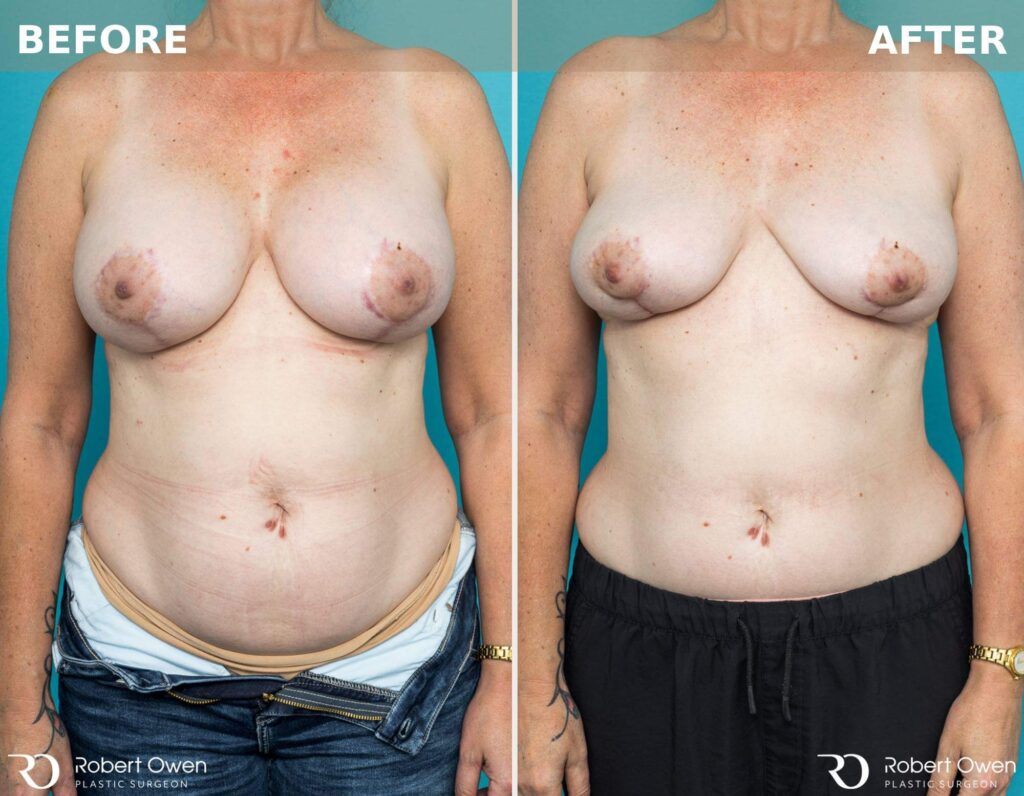
Breast Implant Removal Before and After Photos
Pain – What to Expect and How It’s Managed
Pain after implant removal is generally manageable but varies between individuals. Key influencing factors include:
- Whether the implants were placed over or under the muscle
- The extent of capsule removal
- Previous surgical scarring or complications
- Whether additional procedures (e.g. mastopexy, fat grafting) are performed
Pain management includes the following:
- Intraoperative local anaesthetic infiltration, often long-acting, to reduce immediate discomfort
- Prescription medications such as paracetamol, anti-inflammatories, or opioids for short-term use
- Step-down pain protocols, allowing a gradual transition to non-opioid options as recovery progresses
- Clear aftercare instructions to reduce swelling, tension, or pressure that may contribute to pain
Importantly, anxiety around pain can amplify the sensation of discomfort. Dr Owen and his team take the time to prepare patients mentally as well as physically, ensuring they understand what to expect and how to manage it.
Risks and Considerations
No surgical procedure is without risks. Patients are given detailed information to help them weigh the benefits and limitations of implant removal. Common risks include:
- Bleeding or haematoma
- Infection
- Fluid collection (seroma)
- Altered sensation or numbness in the breast or nipple area
- Skin laxity or contour irregularity
Dr Owen employs surgical techniques that reduce risk, such as:
- Precise dissection and haemostasis
- Use of drains where necessary
- Strict sterility, including the 14-point plan and no-touch techniques where applicable
Patient suitability is key to reducing complications. This includes assessing smoking status, nutritional status, history of autoimmune conditions, and individual healing tendencies.
Implant Removal Pain Management FAQs
Further Reading
- Read more about Options After Removing Breast Implants
- Read more about Do I Have a Ruptured Breast Implant?
- Read more about What is an Enbloc Removal?
- Read more about What is Capsular Contracture?
Why Choose Dr Robert Owen
Dr Owen is a Specialist Plastic & Reconstructive Surgeon with extensive experience in breast procedures, including both aesthetic and reconstructive surgeries. His practice is built on the values of:
- Integrity and transparency in all communication
- Individualised surgical planning based on anatomy and goals
- Collaborative care with other medical professionals when needed
He is known for spending time with his patients, offering thorough preoperative education, and ensuring that expectations are aligned with clinical possibilities. His patient-first approach also includes referring patients to trusted colleagues when he believes another specialist may be more suitable.
Dos and Don’ts After Breast Implant Removal Surgery
✅ Dos
- Do attend all scheduled follow-ups to ensure proper healing
- Do wear your support garment (usually for 6 weeks) as instructed
- Do keep surgical sites clean and dry, following aftercare instructions
- Do engage in gentle walking once cleared to do so (usually 2 weeks post-op)
- Do report unusual symptoms such as increasing pain, redness, or fluid discharge promptly
❌ Don’ts
- Don’t resume strenuous activities or lifting until cleared (usually after 6 weeks)
- Don’t massage your breasts unless instructed – Dr. Owen does not typically recommend a massage post-op
- Don’t expose scars to the sun, as this can darken pigmentation
- Don’t smoke, vape, or use nicotine products pre- or post-operatively, as this delays healing and increases complication risk
- Don’t compare your outcome to others; results are highly individual based on your anatomy, healing, and goals
Next Steps – Considering Breast Implant Removal With Dr Owen
If you’re considering breast implant removal for any reason, scheduling a personalised consultation is the most appropriate first step. Dr Owen will discuss your goals, medical history, and clinical suitability, and offer honest advice about risks, recovery, and potential outcomes.
Visit the contact us page for more information or to book a private consultation.
📌 Location: Perth, Western Australia
📞 Contact: Clinic details contact details