Otoplasty in Perth with Dr Robert Owen
Otoplasty, commonly referred to as ear pinning surgery, is a specialised face procedure performed to adjust the shape, size, or position of the ears. At his Perth-based clinic, Dr Robert Owen, a Specialist Plastic & Reconstructive Surgeon, provides otoplasty to patients seeking solutions for prominent, asymmetrical, or misshapen ears. While frequently pursued for aesthetic concerns, otoplasty may also address functional or psychosocial considerations, particularly in children. Ears that protrude noticeably from the head can be a source of self-consciousness or teasing, especially during formative school years. For some adults, lifelong awareness of ear prominence may impact hairstyle choices, self-image, and comfort with public appearance.
Dr. Owen’s patient-centred approach ensures that each individual receives personalised care based on anatomy, goals, and best-practice surgical planning. As a Fellow of the Royal Australasian College of Surgeons (FRACS), he brings evidence-based techniques and a strong multidisciplinary ethos to every procedure. With years of experience across both cosmetic and reconstructive surgery, his commitment to honest communication and surgical excellence remains a cornerstone of his practice.
What Is Otoplasty?
Otoplasty is a surgical procedure that modifies the external ear (auricle) to improve its appearance or correct deformities. This may involve repositioning prominent ears closer to the head, reshaping irregular cartilage, or reconstructing damaged ear structures. The aim is to create an ear contour that is more naturally aligned with the head and balanced with the rest of the face. While the ears only account for a small portion of facial anatomy, their positioning can strongly influence perceived facial harmony and profile.
This procedure can also correct a range of congenital abnormalities, such as lop ear (where the top portion folds downward), Stahl’s ear (featuring an extra cartilage fold), and constricted ear (with a tight or underdeveloped rim). Traumatic injuries or previous surgeries that led to structural issues may also be corrected with tailored otoplasty techniques. In younger patients, early intervention may prevent long-term psychosocial effects, while adult patients often report a sense of relief and improved self-image following surgery.
Otoplasty is generally considered a long-lasting solution, as the cartilage retains its new position well once healed. Importantly, it is not intended to alter hearing function but instead to address concerns related to appearance and comfort.
Who Needs It (Candidates For Otoplasty)
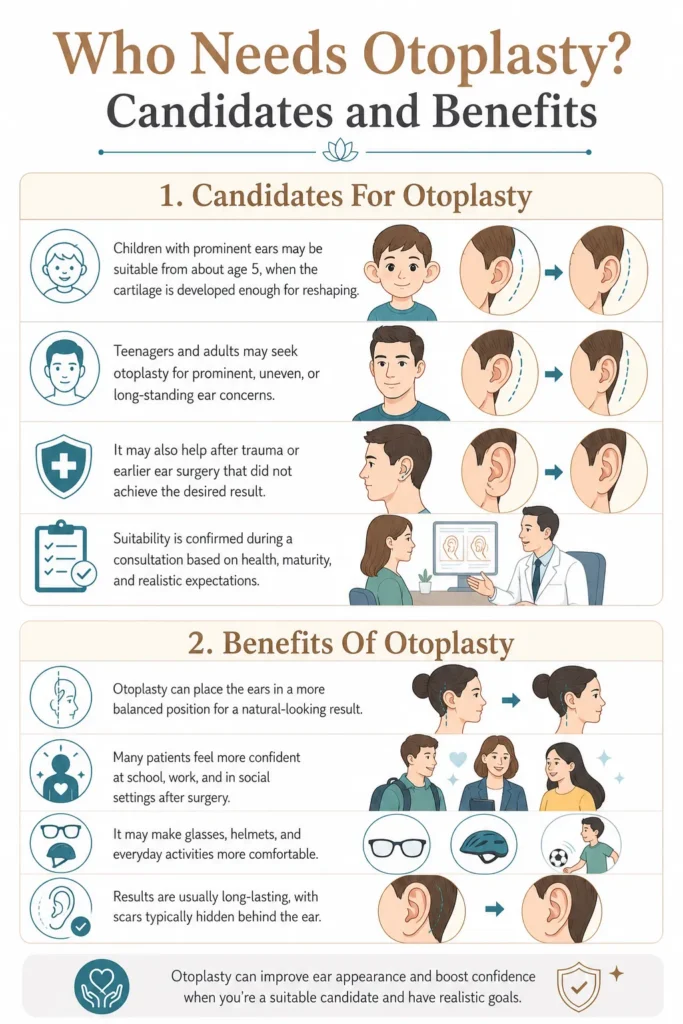
Candidates for otoplasty are often individuals whose ears are noticeably prominent or asymmetrical. This may include children whose ear prominence becomes apparent from around age five, when the cartilage has matured enough for surgical reshaping. The procedure can be especially helpful before children begin school, as it may reduce the likelihood of teasing or self-consciousness in social environments.
Teenagers and adults may also seek otoplasty if they have always been unhappy with their ear shape or if the concern has become more pronounced over time. Some adults may have had previous facial surgery, while others may be considering otoplasty following trauma or changes that have affected the shape or position of the ears. In these cases, otoplasty may offer an effective revision or reconstruction strategy.
Dr. Owen takes a thorough approach to patient assessment, ensuring suitability for surgery on both medical and emotional grounds. Children must be mature enough to follow post-operative instructions, while adult patients should be in good general health and have clear, realistic expectations. Suitability is always determined through a comprehensive clinical consultation, ensuring the most appropriate and beneficial outcome.
Benefits Of Otoplasty
The benefits of otoplasty can be substantial, particularly for individuals who have experienced long-standing dissatisfaction with their ear appearance. By bringing the ears into a more balanced position, patients often feel a sense of relief and comfort, both physically and emotionally. The repositioning of the ears closer to the head can dramatically reduce the appearance of protrusion without drawing attention to the change, leading to a more harmonious and natural look.
Beyond the physical changes, many patients report improved self-assurance in social and professional settings. Children may feel more comfortable at school or during sports and group activities. Adults often describe a newfound freedom in hairstyle choices or participation in activities they once avoided. In cases where the ear position affected the wearing of helmets or glasses, otoplasty can also offer functional benefits.
The outcomes are generally long-lasting, with minimal need for revision. Cartilage once reshaped tends to hold its new contour reliably, and scars are typically well-concealed behind the ear. Patients commonly describe the results as subtle yet transformative in their day-to-day confidence and comfort.
Before And After Photos
Before-and-after images of otoplasty procedures performed by Dr. Owen are available for viewing during consultation. These images are a helpful part of the decision-making process, allowing prospective patients to visualise what changes are possible while understanding the variability of results based on individual anatomy. All examples shown reflect actual outcomes and are selected to illustrate typical post-operative results across a range of cases.
These visuals also serve to set realistic expectations. Otoplasty aims to bring the ears into proportion with the head and improve symmetry, not to create a perfectly identical or “ideal” ear shape. Dr. Owen explains the nuances of each case during consultation and will highlight any limitations that may apply based on existing ear structure, cartilage thickness, or previous procedures.
To view patient images, visit the website gallery page or request access at your appointment. All patient photographs are shown with full consent and in accordance with medical privacy and ethical standards.
Contact UsConsultation For Otoplasty
The consultation for otoplasty is a vital step in ensuring safe, appropriate, and personalised care. Dr. Owen conducts a comprehensive assessment to understand each patient’s goals and determine whether surgery is recommended. This session includes a detailed examination of the ears, analysis of symmetry, and discussion of cartilage flexibility and skin condition, all of which influence surgical planning.
Patients are encouraged to openly discuss their motivations and expectations. Dr. Owen provides clear explanations of what can be achieved and outlines any limitations that may arise due to anatomical or healing factors. Where suitable, he may also discuss alternative treatments or the potential need for staged procedures in complex cases.
This appointment also includes a review of the recovery process, postoperative care, and anaesthetic options. For paediatric patients, the consultation may involve parents or guardians, and Dr. Owen takes care to ensure both the child and their caregivers understand what the surgery involves. When appropriate, input from anaesthetists or paediatricians may be included to ensure comprehensive care.
A written summary of the surgical plan and tailored preoperative instructions are provided to support informed decision-making and prepare patients thoroughly for surgery day.
How Is It Performed (Surgery For Otoplasty)
Otoplasty is typically performed in a hospital setting as a day procedure. The type of anaesthetic used depends on the patient’s age, overall health, and the complexity of the case. Children usually undergo the procedure under general anaesthesia to ensure comfort and immobility. Adults may have the option of local anaesthesia with sedation, depending on their preference and surgical plan.
The procedure begins with a discreet incision placed behind the ear, in the natural crease where the ear meets the head. Through this access point, the cartilage is exposed and reshaped using permanent internal sutures. These sutures allow the ear to be folded or repositioned closer to the scalp. In some cases, a small amount of cartilage may be removed to achieve the desired contour. The incision is then closed with fine sutures, and a compression dressing or bandage is applied.
In more complex cases, additional structural work may be required, such as cartilage grafting or reinforcement. Revision surgeries or reconstructions may take slightly longer due to scar tissue or altered anatomy from previous interventions. Typically, the entire procedure is completed within one to two hours, and patients are monitored for a short time post-operatively before being discharged.
Recovery After Otoplasty
Recovery after otoplasty is generally straightforward, and most patients are able to resume normal routines within a short period. Immediately after surgery, a supportive dressing is applied to maintain the ear’s new position and protect the surgical site. This is usually worn for the first few days and is then replaced by a soft headband, particularly at night, to prevent accidental trauma while sleeping.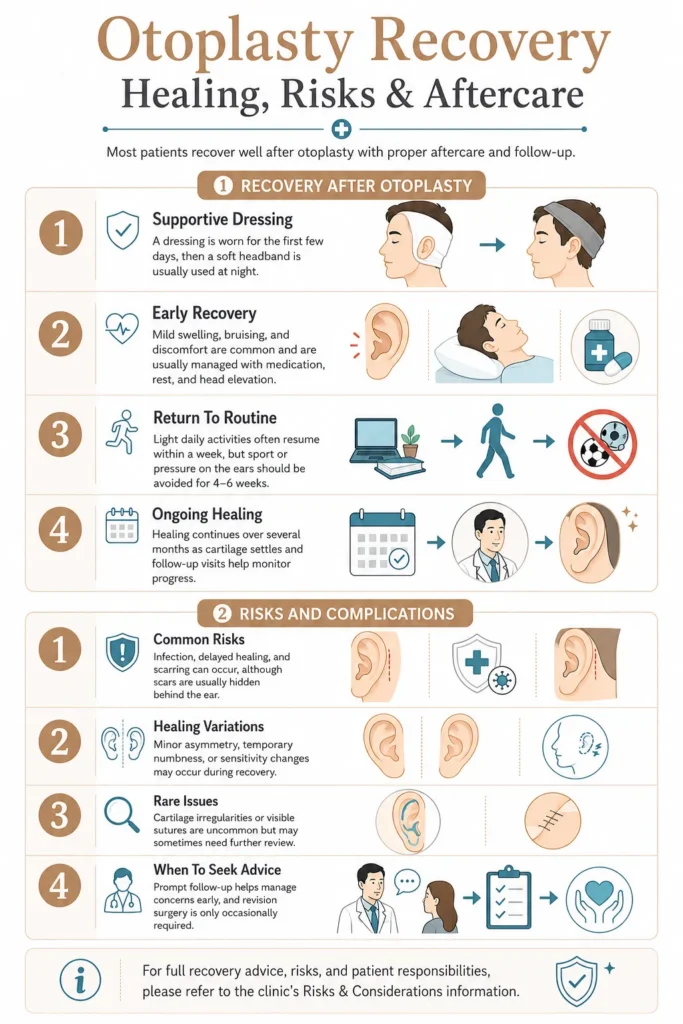
In the first few days following surgery, some swelling and bruising are expected, along with mild discomfort, which is usually well managed with oral medication. Patients are advised to rest, keep the head elevated, and avoid any pressure on the ears. Dr. Owen provides detailed aftercare instructions and arranges follow-up visits to monitor healing.
By the end of the first week, most patients feel comfortable returning to light daily activities. School-aged children often return within 7 to 10 days, while adults may resume work sooner, depending on the nature of their occupation. Strenuous activities, contact sports, or any actions that might impact the ears should be avoided for at least 4 to 6 weeks.
Healing continues over several months, with scar tissue maturing and the cartilage stabilising in its new position. Dr. Owen monitors patients closely during this period to ensure optimal results and to address any concerns that arise during recovery.
Risks And Complications Of Otoplasty
Like all surgical procedures, otoplasty involves certain risks, although serious complications are uncommon when performed by a qualified surgeon. Dr. Owen thoroughly explains these risks during consultation, and patients are provided with written information outlining both common and less frequent complications.
Potential issues include infection at the incision site, delayed healing, and scarring, although scars are usually well hidden and fade over time. Asymmetry, while minimised through careful planning, may still occur due to individual variations in healing or anatomy. Some patients may experience numbness or sensitivity changes around the ear, which are generally temporary.
In rare cases, cartilage irregularities or suture visibility can occur. Revision surgery may be needed to address such issues if they persist. Dr. Owen uses techniques aimed at reducing these risks, including minimal cartilage removal, secure internal suturing, and sterile protocols. His proactive approach ensures that any complications are promptly identified and managed with a clear, supportive plan.
For a complete discussion of surgical risks and patient responsibilities during recovery, please refer to the Risks & Considerations page on our website.
Contact UsCost Of Otoplasty
The cost of otoplasty can vary significantly depending on the complexity of the procedure, the type of anaesthesia required, and whether one or both ears are treated. After the initial consultation, a detailed fee estimate is provided. This includes surgical fees, hospital theatre and anaesthesia costs, postoperative garments, and follow-up appointments.
Dr. Owen and his team are committed to transparency in pricing and are happy to clarify what is and isn’t included in each quote. Payment options and relevant policies are discussed clearly, allowing patients to make financial decisions with confidence.
For general information, visit the Costs page. Individualised quotes are only provided after clinical assessment.
Medicare Coverage And Insurance
In specific circumstances, otoplasty may qualify for Medicare item numbers, especially when the procedure addresses congenital deformities or significant psychosocial distress in children. In such cases, a general practitioner referral and clinical documentation are often required. Dr. Owen can assess whether your situation meets Medicare criteria and help guide the documentation process.
Private health insurance may cover portions of the procedure if an item number applies. This may include theatre fees, anaesthetic services, and a portion of the surgeon’s fee. Coverage levels depend on the patient’s health fund and policy tier. Patients are encouraged to contact their insurer directly or allow Dr. Owen’s administrative team to assist with pre-authorisation and claims preparation.
Why Choose Your Surgeon
Dr. Robert Owen is a fully qualified Specialist Plastic & Reconstructive Surgeon who offers both cosmetic and reconstructive ear procedures in Perth. His extensive training, FRACS accreditation, and hospital affiliations allow him to offer high-standard care across a range of complex and routine surgeries. He takes the time to understand each patient’s motivations and expectations, ensuring realistic goals are set before proceeding.
His approach is grounded in professionalism, clinical skill, and patient advocacy. Whether treating a child with congenital ear prominence or an adult seeking a long-awaited change, Dr. Owen combines evidence-based techniques with individualised care. He believes in shared decision-making and welcomes questions at all stages of treatment.
Patients can expect honest guidance, attentive follow-up, and a surgical outcome based on careful planning and precision.
“It’s important that patients feel heard. I don’t rush consultations – every case is different, and the best outcomes come from collaborative decision-making.” – Dr. Robert Owen
Contact UsFAQs
What does ear cartilage feel like after surgery and will it soften over time?
In the weeks following otoplasty, the cartilage may feel slightly firm or tight due to the internal sutures and recent reshaping. Over time, as the healing process continues, the tissue softens and settles into its new position. Most patients find that the ears begin to feel more natural within a few months.
Can I still wear earbuds, headphones or glasses comfortably after the ears have been repositioned?
Yes, most patients are able to wear earbuds, over-ear headphones, and glasses comfortably once healing is complete. In the early weeks, however, pressure on the ears should be avoided. Dr. Owen provides guidance on when and how to resume these activities based on individual healing progress.
Is there any difference in approach when only one ear needs correction versus both?
When only one ear is being corrected, special care is taken to match it to the natural anatomy and projection of the opposite ear. The surgical planning becomes more focused on symmetry and balance. Although the technical steps are similar, the assessment and fine adjustments may take more time when working on a single ear.
How does prior trauma or scarring influence what can be achieved during otoplasty?
Previous trauma or surgical scarring can make otoplasty more complex. Scar tissue may limit cartilage mobility or affect skin quality. In these cases, Dr. Owen carefully evaluates the tissue condition and may adjust the surgical approach or recommend staged procedures to optimise outcomes.
What happens if I accidentally bump or roll onto my ear during the early recovery period?
Minor pressure is unlikely to cause significant issues, but repeated or forceful impact during early healing can affect the final shape. If you suspect any disruption or feel unusual pain or swelling, it is important to contact the clinic promptly. Wearing a soft headband at night reduces the risk of accidental contact.
Are there specific activities or environments I should avoid even after initial healing is complete?
Even after the initial healing phase, it is wise to avoid activities that involve prolonged pressure on the ears, exposure to extreme temperatures, or repetitive trauma. Contact sports and situations where the ears could be pulled or impacted should be approached with caution for several months.
Will the shape or position of the ears change as I age or if I lose or gain weight?
While significant weight changes do not usually affect ear shape, the natural aging process may subtly alter skin tone and cartilage elasticity over time. However, the structural position of the ears typically remains stable after surgery. Otoplasty is designed to offer durable, long-lasting results.
Medical References
- Otoplasty Surgical Techniques and Clinical Outcomes – https://pubmed.ncbi.nlm.nih.gov/41567352/
- Otoplasty for prominent ear: A systematic review of surgical techniques and outcomes – https://pubmed.ncbi.nlm.nih.gov/41858427/
- Complications of Cartilage Sparing Otoplasty: A Systematic Review and Meta-analysis – https://pmc.ncbi.nlm.nih.gov/articles/PMC11045554/
- “Inside-out” otoplasty in school-age children: Clinical and aesthetic outcomes – https://pubmed.ncbi.nlm.nih.gov/39951975/
- Quality of life after otoplasty for prominent ears in children – https://pubmed.ncbi.nlm.nih.gov/36427795/
- Complication Rates From Otoplasty at a Tertiary Facial Plastic Center – https://pmc.ncbi.nlm.nih.gov/articles/PMC9432815/
- Health-related quality of life, patient benefit, and clinical outcome after otoplasty using suture techniques in 62 children and adults – https://pubmed.ncbi.nlm.nih.gov/20697314/
Ready To Take The Next Step?
If you or your child are considering otoplasty, Dr. Robert Owen welcomes you to schedule a private consultation in his Perth clinic. During this appointment, you’ll receive a detailed evaluation, a realistic discussion of outcomes, and clear information about the procedure, recovery, and fees. From first contact to final follow-up, our team prioritises patient education and a seamless care experience.
To learn more or request an appointment, visit related pages on the website or contact our friendly team. We’re here to guide and support you at every stage of your surgical journey.
Take Surgery Quiz
Further Reading
-
- Read more about Face Surgery Perth